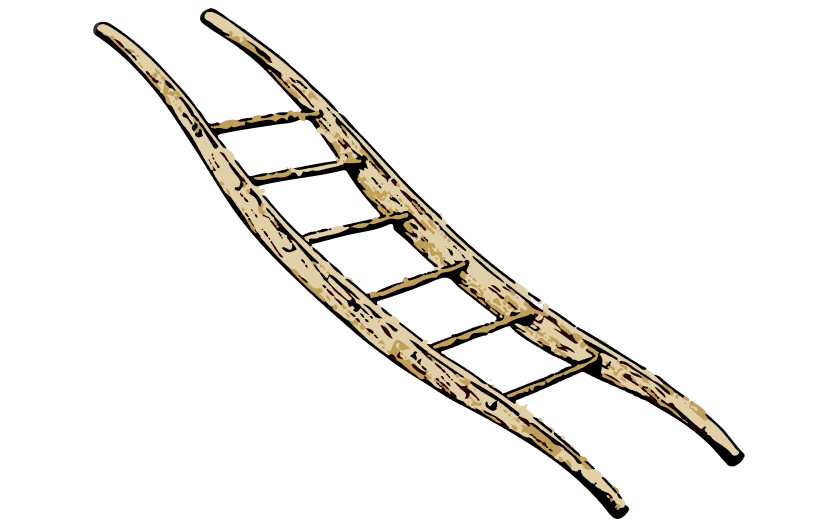
Carrela

"The seaweed that is harvested in the water with the graveta (rake) or rodafole (net) is at first piled up out of the reach of the waves, and only then is transported to the dune, where it is stretched out to dry. The most common process of performing this transport is using the handbarrow carreia (padiola ) ... These handbarrows, the Carrelas, are about 1.50 by 0.60. Round poles connect the legs, or poles and crosspieces, forming the ballast, and are all made of pine".
Veiga de Oliveira and Galhano, 1958, p.93

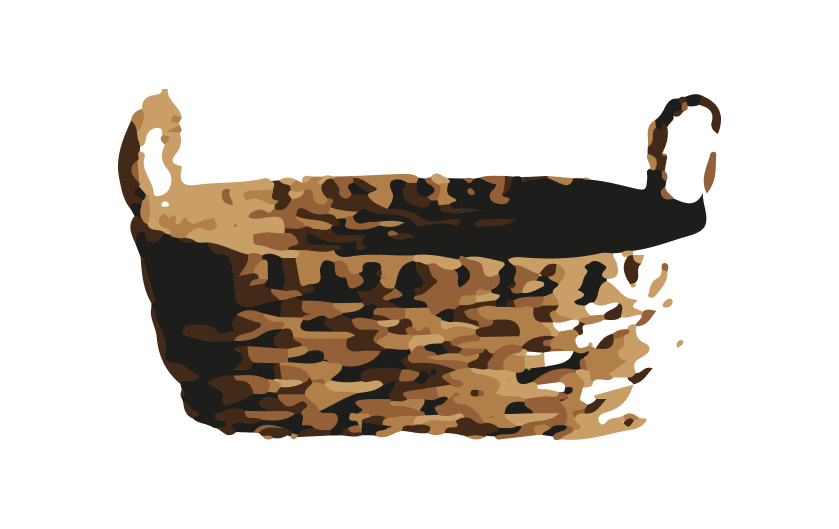
Cesto

"On the country's northern coast, the sea seldom throws to the shore and leaves appreciable quantities of seaweed in the dry. Then it is harvested with rakes or gathered by hand into baskets. * * In Viana do Castelo, we saw women hand gathering the seaweed stuck between the reeds on the beach at the beginning of the high tide. ..."
Veiga de Oliveira and Galhano, 1958, p. 80

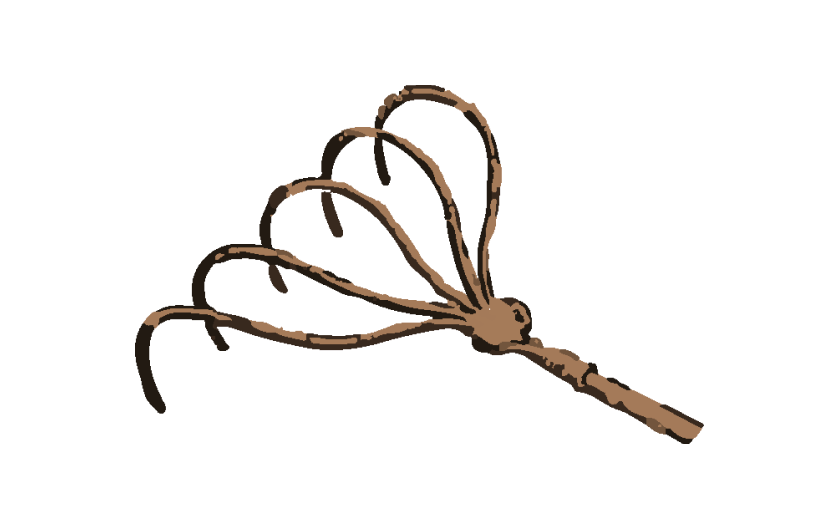
Croque

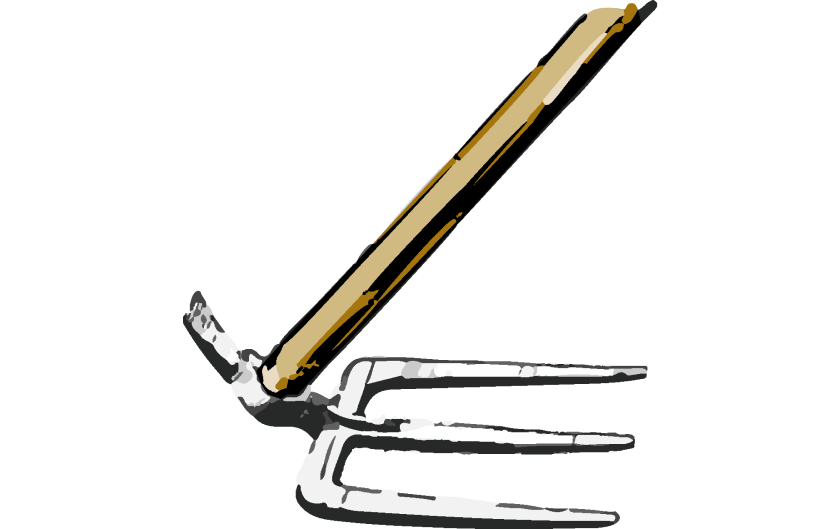
"Another tool used from inside boats is a kind of rake, big and strong, with all the teeth in iron, and a long and thin handle (over 9 m in length). ... In Amorosa and Castelo de Neiva, the tool which plays the role of the hook is the croque (Des. 5). Formed by 5 or 6 iron teeth, strong and recurved, which comes out of a ferrule where the handle enters, which is long and the same as the hooks. The small croques, of 5 teeth, weighing about 5 kg, work in the water near the shore, between the rocks; the 6 teeth, weighing more than 8 kg, are for deeper water, further out. The croque is used both in boats and rafts ..."
Veiga de Oliveira and Galhano, 1958, p. 90

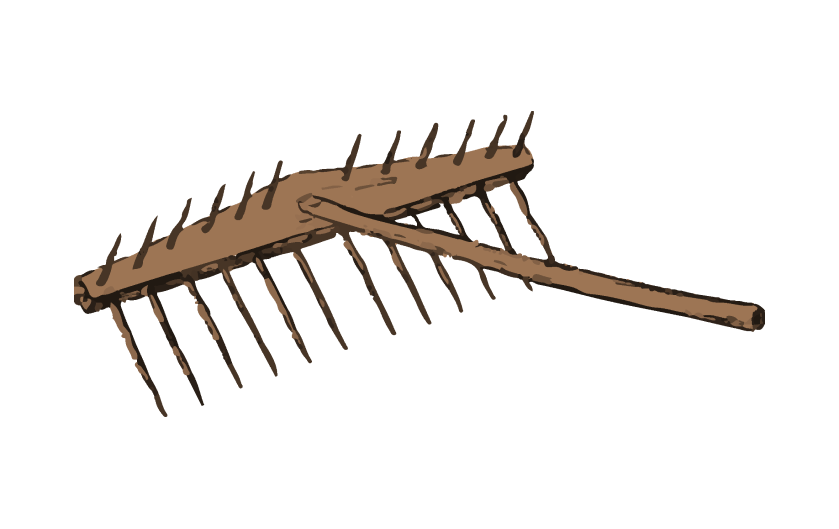
Engaceira

"This tool is commonly composed of a double comb with wooden teeth embedded at the end of a long pole. The two combs are built on the same crossbar, with the flat teeth perpendicular to each other; the lower comb has twenty-two teeth and the upper one twelve. In Vianna do Castello, this tool is called “garamanha” (rake). ..."
Baldaque da Silva, 1892, p. 365

Foucinhão

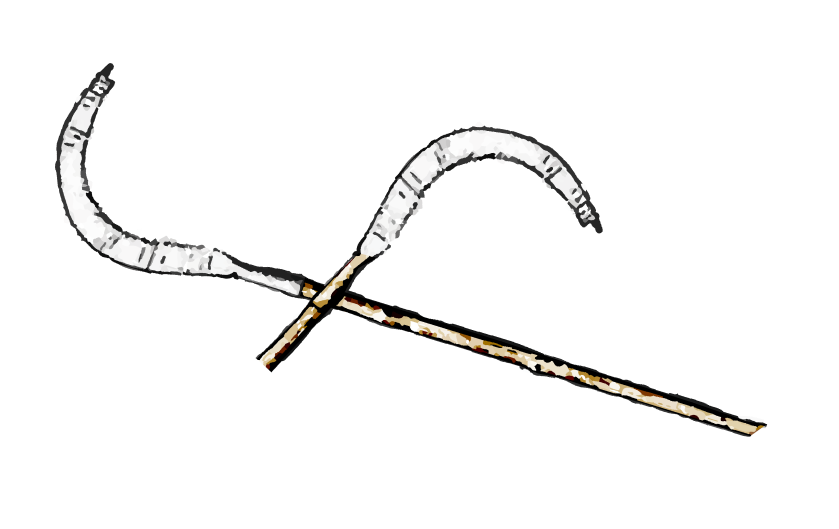
"The cut is commonly made with the foucinhão (scythe). In Castelo do Neiva it is named “fouce”. A long and opened serrated scythe, embedded in a long pine pole (over 3 m), and which both cuts and brings the seaweed into the boat or raft".
Veiga de Oliveira and Galhano, 1958, p. 88

Gadanho

"This is a tool like a rake, except that the teeth of the comb are made of iron so that they can resist when the bottom is dredged, pulling out the plants attached to it, which usually settle in stone or gravel bottoms. ..."
Baldaque da Silva, 1892, p. 366

Jangada de Anha

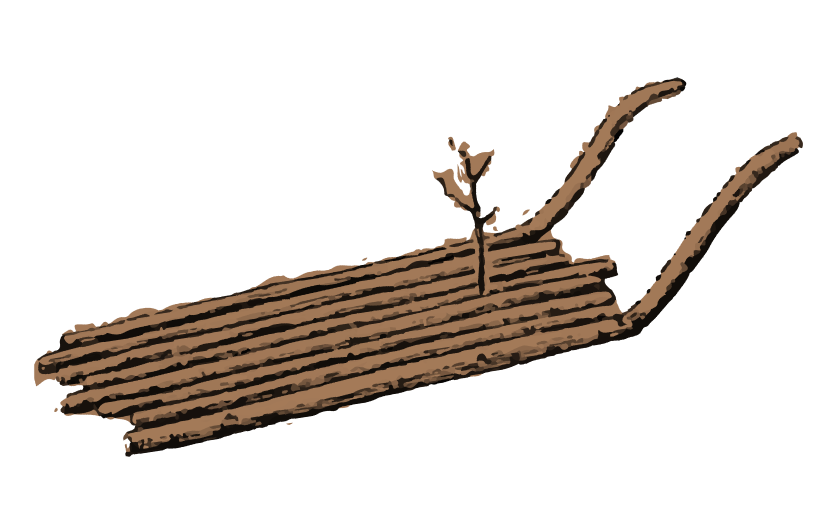
"This raft, the first one found in the north of the country in Vianna do Castello, is composed of eight trunks of very light wood, connected, forming a platform, by two or more pegs, and having laterally two boards arranged as a false edge. The trunks of the edges are longer and rise in the shape of a plough tail. These rafts are seen in the harbour of Vianna, twelve to fifteen, exploring the rocky maritime regions and the adjacent coast which borders the coastline from Montedor to the coast south of the river Lima, in the place called Anha".
Baldaque da Silva, 1892, p. 367

Jangada de Castelo do Neiva

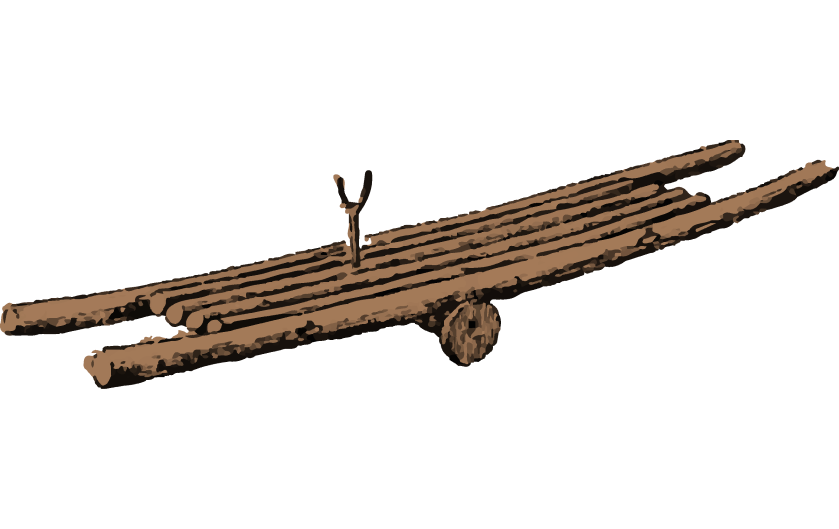
"Formed of six connected wooden trunks, the sides larger, and rests on an axle with wheels to easily sweep and launch into the sea. This system, simpler than the previous one [Raft from Anha], is not as developed as those used in other seaweed harbours".
Baldaque da Silva, 1892, p. 367
As described orally in Castelo do Neiva; generally, the raft of six trunks were used by women, and the men's had nine.

Maceira

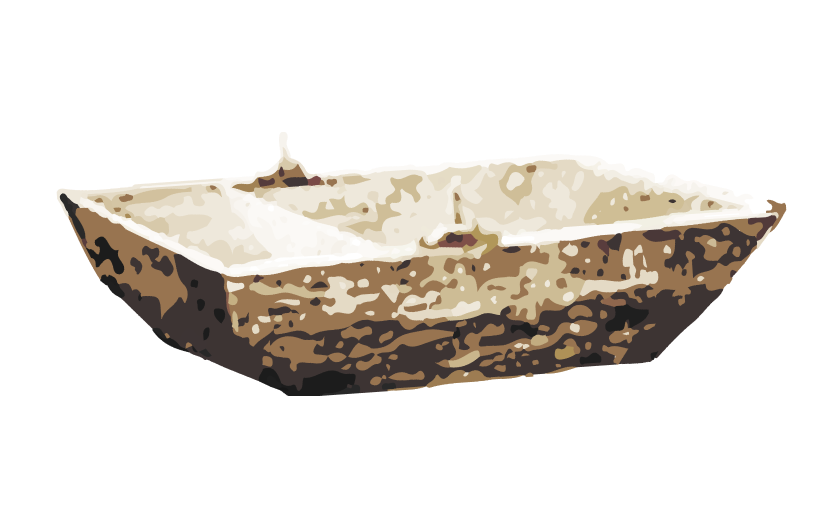
"The north fishermen used these open wooden boats a lot in coastal fishing, especially harvesting seaweed. In the images, we have these boats represented, if we can call rectangular boxes without the shape of a bow or stern, boats. The maceiras are easy to handle in and out of the water, as a single man can manoeuvre them because of their lightweight".
Baldaque da Silva, 1892, pp. 399-400

Redenho

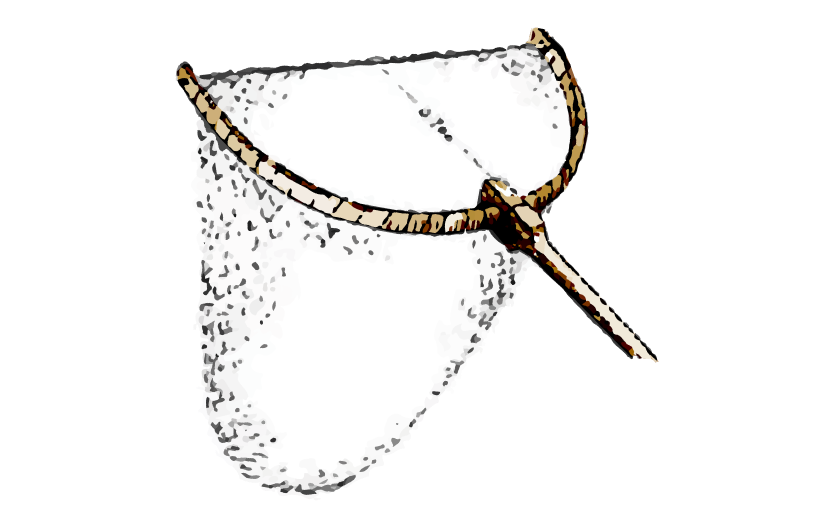
"This handnet is a net bag with a wide mesh, with the mouth in a wooden arc, connected to a long pole. To gather the seaweed with the redenho, one dips the net while the person is in the water or on board and pulls the handle until the seaweed is removed with as much as it can harvest, and then repeats the manoeuvre successively, with the seaweed harvester each time placing the algae on the beach or stowing it inside the boat..."
Baldaque da Silva, 1892, pp. 365-366